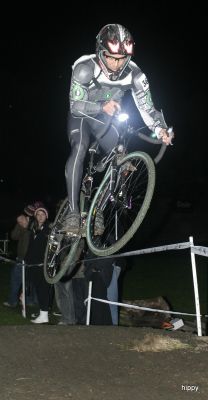
Great thread detailing the whole build process.
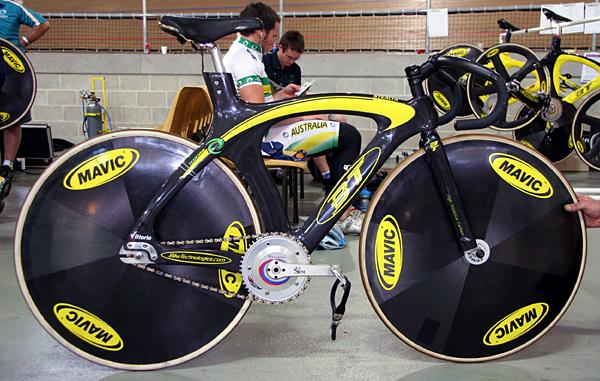
Anna Meares’ world record breaking BT Stealth (Note: Time trial bars have been swapped for standard bars in this photo). Photo ?: Greg Johnson/Cyclingnews
An interesting story regarding Australia’s record-breaking track bike..
Sounds of Summer: Intrigue and heartbreak in cycling
James Panichi reported this story on Monday, January 10, 2011 11:10:00
ELIZABETH JACKSON: Hello, I’m Elizabeth Jackson and this is a current affairs special.
It’s been described as the most successful piece of locally designed sporting technology since the winged keel of Australia 2 stole the America’s Cup back in the early ’80s. Yet very few people outside the world of track cycling have ever even heard of it.
The unnamed bicycle, designed in Australia in the late 1990s, dominated track cycling competitions around the world for almost 10 years – helping to break records and claim a treasure-trove of Olympic medals. The bike’s sleek, distinctive shape is synonymous with success on the track.
But when the ABC’s James Panichi set out to write an account of the ground-breaking design, he stumbled across an international story of intrigue, recriminations and heartbreak. Today, he’ll attempt to piece together just a few of the mysteries surrounding a bike which was to be known as the ‘Elliot Flyer’.
COMMENTATOR: Zijlaard is less than half a lap away from claiming the Olympic gold medal in the women’s 3 kilometres pursuit! You’re going to hear the gun sound in a couple of seconds! She punches the air! There it is! Her time, 3 minutes 33.36…
JAMES PANICHI: It’s a world in which a 10th or a 100th of a second can mean the difference between glory and the dustbin of defeat. And at the 2000 Olympic Games, the design of bicycles gave athletes a winning edge.
Everyone agrees the bike used by Australia and Holland delivered the goods. The carbon-fibre design was fast and very stiff meaning that virtually none of the athletes’ energy was lost between the pedal and the pavement. And its unusual, curved top-bar meant you could spot it a mile away.
COMMENTATOR: What will her time be? Up to the line! Her time: 34.696, a new Olympic record! Michelle Ferris is ranked number one at the moment, with five riders remaining in the race for the medals.
JAMES PANICHI: What made the bike’s dominance of track cycling over two Olympic Games all the more special was that it was home-grown. A small manufacturer of industrial tools in Melbourne’s northern suburbs made the bikes. Its effort was repaid many times over through a lucrative sponsorship deal with the Australian team.
BT, or Bike Technologies, is the name of that company, and its ongoing role as official supplier to the Australian team is recognition of its success at the 2000 and 2004 Games.
(Promo video music)
The assumption in cycling circles has always been that BT gave Australia the winning edge. Here’s track cycling coach Gary Sutton, talking in a promotional video ahead of the 2004 Games.
GARY SUTTON: I think the secret weapon is that they’ve trained very, very hard and they’re very, very dedicated. But the bottom line is without the best machine, you’re certainly not going to go that little bit extra, and we’re so proud of this bike and, as I said, it is the best machine around at the moment.
(Sounds of training session at the Adelaide Velodrome)
JAMES PANICHI: By 2008, the original BT had been modified, but its distinctive, curved shape survives to this day. I’ve travelled to Adelaide to watch an Australian track cycling team training session.
Anna Meares is one of the cyclists. She won gold for Australia at the Athens Olympics.
ANNA MEARES: …on training days, but when it comes to competition, we get spoilt and our mechanics do it all for us.
JAMES PANICHI: And tell me something about the bike you’re riding. What kind of a bike is it?
ANNA MEARES: This is a Bike Technologies, or BT as it’s known, and the brand of it is called a Blade. It’s the latest model of the BT track bike and this one’s probably one of the earlier models. It’s a little lighter than the ones that the boys are currently riding, which has been beefed up with a few extra layers of carbon to withstand the extra power the boys can put out.
JAMES PANICHI: What do you need to get out of your bicycle?
ANNA MEARES: It needs to be extremely light but also extremely strong. We don’t need to waste any of the power and energy that we’re putting through our legs through a bike that’s going to flex and waste some of that energy. So, it’s all about trying to get that bike moving forward as precisely as possible.
JAMES PANICHI: Sorry, what’s your name?
NATHAN CORRIGAN: Nathan Corrigan.
JAMES PANICHI: Nathan, what are you doing?
NATHAN CORRIGAN: Just changing my gear.
JAMES PANICHI: Okay, tell me something about the bike that you’re riding.
NATHAN CORRIGAN: It’s made of carbon fibre. We’re riding on carbon-fibre wheels. They’re bladed front spokes. That’s about it, really.
JAMES PANICHI: And what’s the name of this model? Does it have a name, this one?
NATHAN CORRIGAN: This is a Stealth. BT Stealth.
JAMES PANICHI: And tell me something about the Stealth. That’s a slightly older model than the others, is that right?
NATHAN CORRIGAN: Yeah, yeah. It’s the one down. The newer one hasn’t got a name yet, so…
JAMES PANICHI: And what’s it like to ride?
NATHAN CORRIGAN: Unreal. Stiff. Very responsive. When you steer, in and out, you turn, it will turn with you. Pretty much any movements you make, it will make.
JAMES PANICHI: And this is a bike that’s been to a couple of Olympics already, this particular model. Why do you think it’s so good?
NATHAN CORRIGAN: Ah, just because it’s so stiff. And Australian-made – they’re made in Melbourne, so they’re readily available.
JAMES PANICHI: Do you ever get sick of it? Do you ever wish you were riding a different bike?
NATHAN CORRIGAN: Nah, nah, not at all. This is the best.
JAMES PANICHI: Okay, thanks for that. That’s great.
Gary, tell me something about the bikes that we have here. They don’t all look the same. What are the differences?
GARY WEST: They’re just subtle variations of the same thing, really. Some are a slightly newer technology, particularly the ones with the flat top-tube – that’s our latest model, supplied to us by Bike Technologies – that’s referred to as the Blade. The ones that have got a more rounder top-tube – that general shape has been the mainstay of the bikes we’ve used for the last couple of Olympics, as you rightly point out.
CYLCLIST: I’ll probably train on my BT all the time besides when I race for Kieran, so what I might do is…
JAMES PANICHI: I set out to write a history of the BT. But was meant to be a report into an overlooked success story of Australian design turned into something else. The moment word got out that I was looking into the bike, strange things started to happen.
Interviews were cancelled, publicity material disappeared and, in one case, an angry sports administrator complained with my head of network at the ABC.
Bike Technologies refused to take my calls and within days of my request for information it had removed all reference to the original BT from its website. The sport’s peak body, Cycling Australia, turned down repeated interview requests. The federal government agency which administers sport, the Australian Sports Commission, was adamant it had no sponsorship deal with Bike Technologies, and it never had.
When I pointed out that the company was listed as a sponsor on the commission’s own website, I was met with an awkward silence. Within a day, all references to Bike Technologies had been taken down.
I was about to give up when I came across this.
(Sound of Dutch-language promotional video)
JAMES PANICHI: It’s a 2006 promotional video from Dutch bike manufacturer Koga-Miyata. And there at centre stage is Australia’s very own BT bike being put through its paces in a wind-tunnel, except it’s done up in Koga-Miyata livery, with the bright orange of the Dutch national team lighting up the frame.
JAMES PANICHI: All of this raises a simple question: why were Dutch athletes using Australia’s secret weapon against Australian cyclists at the 2000 and 2004 games? Who gave them the design? And why?
(Sound of Dutch directory assistance)
JAMES PANICHI: When I contacted Koga-Miyata headquarters, I was immediately put through to the company’s managing director, Wouter Jager.
His first question was: are you a lawyer? When I explained why I was calling he told me he wasn’t available for interview.
But over the next month we exchanged emails and he eventually agreed to release most of his correspondence with Bike Technologies in Melbourne.
(Sound of Koga-Miyata promotional video)
JAMES PANICHI: The publicly listed company which owns Koga-Miyata is one of the largest bike manufacturers in the world. However, when it was asked to provide the Dutch team with a high-tech track bike ahead of the 2000 Olympic Games, the company had nothing to offer.
So, on a visit to Australia, an athlete with links to Koga-Miyata was shown a BT prototype and she decided it was a winner. So, BT simply sold Australia’s secret weapon to the Dutch.
Here’s an example of the fax exchanges from Melbourne to Holland at the time.
EXTRACT FROM FAX (Voiceover): Dear Mr Kuipers, I can offer you promotional discount on 11 framesets, if the framesets can carry BT logo with Koga-Miyata that would be appreciated. Frame and Fork A$5,400; BT Pro 1 – TT Handlebars, width 40cm, weight approx 980kg, A$1800. Delivery 10-12 weeks from official order. Payment prior to delivery.
JAMES PANICHI: The bikes were then sent to Holland, already spray-painted with Dutch colours. In other words, an Australian Olympic sponsor was making its equipment available overseas even before Australian athletes had had a chance to take the bikes for a spin.
This was highly unusual, particularly because, as I later found out, the bike’s design had received official support, both direct and indirect, from the Australian taxpayer.
SBS REPORTER: … their BT bikes considered the best in the world. In this small factory in Melbourne, around 600 are produced every year, with each one costing up to $25,000. Brian Bailey and the entire Australian…
JAMES PANICHI: An Australian bike, which documents suggest was designed with Australian public money, was being churned out by the dozen in a small, toolmaking factory in suburban Melbourne.
It was then being delivered to the door of Australia’s main track cycling rival, something which Bike Technologies was happy to acknowledge in media interviews with the full support of the Australian Sports Commission and Cycling Australia.
In 2004, the Dutch received a consignment of BT bikes ahead of that year’s Olympic Games. Soon after, Mr Jager received a strange call. It was from a man claiming to represent someone called Lloyd Pope. Lloyd Pope, he claimed, was the designer of the BT bike.
The caller warned Mr Jager that Koga had no right to use that design and he threatened legal action unless the company ceased and desisted. At this point, Koga panicked. It had never asked to see the bicycle’s design licence, so the Dutch contacted Bike Technologies and asked for clarification.
What it got was correspondence from Bike Technologies’ lawyers and a phone call from a company manager. Mr Jager was told that Lloyd Pope was simply a disgruntled former technician who had been employed by Bike Technologies and that his demands should be ignored.
While the letter from a Melbourne law firm said this:
EXTRACT FROM LETTER (Voiceover): The design of the frames supplied by us was developed jointly by BT, the Australian Institute of Sport and the Australian Cycling Federation.
JAMES PANICHI: I realised that I had stumbled across a bitter dispute over intellectual property. I soon found out that neither the Australian Institute of Sport – which is owned by the Australian Government – nor what was then the Australian Cycling Federation had any claim to the intellectual property of the bicycle.
The lawyer’s letter contained other claims which I have since confirmed to be untrue, including the suggestion that RMIT University owned the licence to the bike. None of it made much sense. I needed to track down Lloyd Pope.
(Sounds of athletes training at velodrome)
JAMES PANICHI: By this stage I had filed Freedom of Information requests with the Australian Sports Commission which owns the Adelaide Velodrome where the national team trains. I asked for all documentation dealing with a cycling sponsorship contract in the lead-up to the 2000 Games.
The Commission denied me access to the documents on the grounds that it was commercial in confidence. I appealed the decision and was again denied access, this time on the grounds of privacy.
However, by then I had managed to piece together the story of Lloyd Pope. Firstly, Mr Pope had never been an employee of Bike Technologies. In fact, in the 1990s he was a successful aerospace engineer from Adelaide, the grandson of Sir Barton Pope, the founder of the Australian whitegoods company of the same name.
At that time, Lloyd Pope had lost a young son in tragic circumstances. From that moment on he poured all of his energy into developing a world-class track bicycle. The bike was to be named the ‘Elliot Flyer’ in memory of his lost son.
Mr Pope signed a sponsorship deal with American software giant EDS to gain access to the computer power required for the project which in the 1990s was still prohibitively expensive. He then put his engineers to work.
He eventually took his design to the Australian Sports Commission in the hope of securing a sponsorship deal for the Australian team with a view to marketing the bike after the Olympics. The Pope Group agreed to provide the design free of charge for a specific number of bikes to be made.
However, the Sports Commission insisted that a Melbourne toolmaking company – later to be called Bike Technologies – be brought in to build the bikes. Sports Commission employees told Mr Pope it was a non-negotiable.
(Music)
Lloyd Pope now lives overseas and he won’t talk publicly about his ordeal. It appears that his lawyers were pursuing – or had already obtained – a large settlement with the Australian Sports Commission and were sworn to secrecy.
But while no-one was talking, I had managed to obtain a copy of the 1999 sponsorship deal he had signed, along with Bike Technologies, Cycling Australia and the Australian Sports Commission. The contract states that Bike Technologies was to use the design to build bikes for the Australian Team, but the intellectual property would remain with Lloyd Pope.
In reading the document, it’s clear what Mr Pope’s intentions had been: he was allowing his design to be used specifically for Bike Technologies to build 28 bicycles, with 12 spare frames. Intellectual property experts I’ve consulted are uncertain whether the document does indeed protect Mr Pope’s design. What that means is that if Bike Technologies used the design to produce more than the agreed number of bikes, the company may not have been in breach of the contract.
However, it appears Mr Pope was afraid that might happen. That’s why he wanted the Sports Commission – therefore the Australian Government – to act as guarantor. Here’s an example of the clauses which appear on almost every page of the contract:
EXTRACT FROM CONTRACT (Voiceover): The program sponsor shall retain its own copyrights and intellectual property used in its contribution to the ‘Team Bike 2000’ program. Pope Group shall have the legal, equitable and proprietary rights to all processes, designs and other intellectual property created in the process. Pope Group retains all copyrights and intellectual property (including pending and subsequently approved patents) including but without limitation to the bicycle design and manufacturing process.
JAMES PANICHI: However, it appears that within weeks of receiving the design, Bike Technologies was selling bikes which were, in appearance, identical to those of the Pope design. And then there’s the money trail.
(Sound of the 2000 Olympic Games Opening Ceremony)
JAMES PANICHI: The sponsorship agreement at the heart of the bike’s development was signed by the Pope Group, the company which became Bike Technologies, the Australian Sports Commission and Cycling Australia. The contract is dated May 11th, 1999 – the year before the successful 2000 Games in Sydney. The deal states clearly that the bike design was all but finished.
Yet soon after that document was signed, the Australian Olympic Committee allocated $424,000 to develop a new track bicycle under a special initiatives fund. That’s in spite of the fact that the design – worth millions of dollars – was already signed, sealed and delivered and the production of the bikes was estimated to cost no more than $20,000 in total.
So, where did the Olympic Committee’s money go? It’s been impossible to find out. Cycling Australia’s annual report from that year acknowledges it received $187,000 from the Australian Olympic Committee for the design of an Olympic bike. But no matter how that money was used, that still leaves $237,000 of Olympic funding unaccounted for.
When I asked the AOC about the grant, it released this statement:
EXTRACT FROM STATEMENT (Voiceover): We invested money in the project to make sure our athletes competed on a level playing field. In other words they needed to have the best technology available and the bike project was essential to make that happen.
The money was well spent. It was a responsible investment by the AOC which helped athletes in 2000 and subsequent Olympic Games and international cycling events. The AOC is confident that Cycling Australia acted with due diligence in this matter
JAMES PANICHI: I then asked the AOC whether it had any way of knowing how Cycling Australia had spent the money. But by then the AOC wasn’t returning my calls.
(Music)
It’s impossible to get to the bottom of what happened because the Australian Sports Commission refuses to release its documentation. But here’s what we do know.
An Australian bike, built under the auspices of the Australian Government and with an injection of public money, was used by Dutch athletes to compete against Australia at the Olympics.
A Dutch bicycle giant bought at least 30 bikes from a small Melbourne tool manufacturer and passed them off as its own. In so doing, it broke Olympic regulations and, technically, Dutch athletes rode illegal bikes at the 2000 and 2004 games.
The Australian Sports Commission and Cycling Australia appear to have turned their back on a sponsorship contract which gave them the moral, if not the legal responsibility, to safeguard a designer’s intellectual property.
The Australian Olympic Committee appears to have lost track of how $425,000 of its grant money was spent. And on paper, the design of a revolutionary track bicycle – called the Elliott Flyer – has disappeared into thin air.
COMMENTATOR: … but Australia’s not involved. Three riders have gone down: Great Britain, Denmark and also Spain. But let’s stay with the Aussies. Down the back straight, Aitken flicks McGrory. Carnage in the front straight. But here comes Australia. They’re going to come across the line in fourth position. Gold medal! Gold medal to Australia!
ELIZABETH JACKSON: That report from James Panichi. You’ve been listening to a current affairs special.
Original article found here: http://www.abc.net.au/worldtoday/content/2011/s3109543.htm
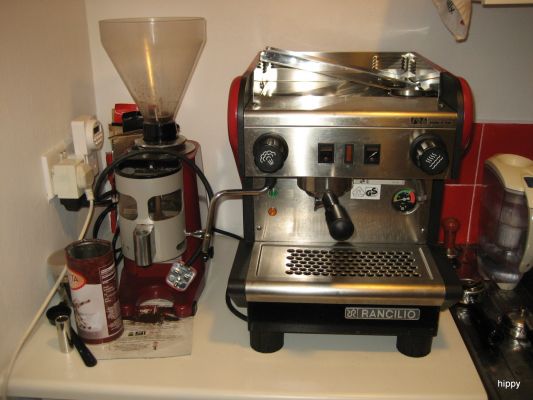
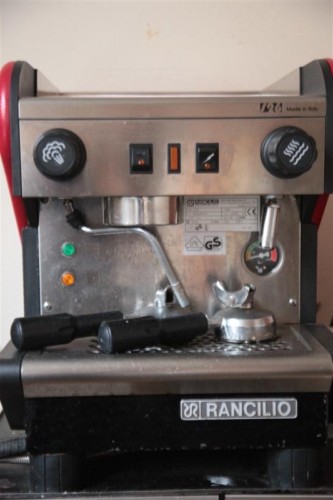
Rancilio S26 plumbed in, single group espresso machine. After the plumber fixed the washing machine valve I could finally install it on Christmas morning.
Pours shots like Guinness, steams milk like an Icelandic geyser! It’s great having a plumbed in machine ready to go whenever necessary.
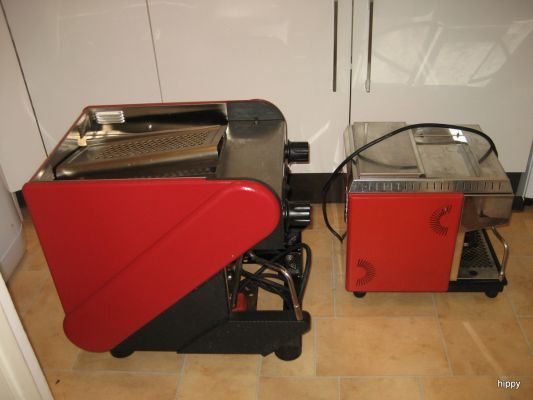
I thought the Bezzera was big when I bought it but the new machine is a true monster.
I still need to either: shorten the drain hose to allow a smoother run into the sink or: install a double drain fitting under the sink to accept the coffee machine and washing machine waste.
My neighbour and buddy Scherrit (aka The Bike Whisperer) is now coaching me, hopefully towards a 24hr TT in 2011. I’m working through my first program now. I’m actually on track for the first week, even with the icy conditions in London earlier this week.
Yesterday was simply an hour on the turbo before saying bon voyage to Tim and Dale, two Melbourne lads heading home. See ya, guys!
Although a road ride was specified I thought I’d have a go at the 3hr ride on the turbo. I figure a large part of a long duration time trial is going to be the ability to focus at a steady output for a long time. I HATE turbo workouts, they bore me to tears and the longest I’ve ever managed is perhaps 1.25 hours, so 3 hours would be a test. To make it more interesting (ie. cheat) I watched some Sufferfest videos (See: @sufferfest). I worked through Revolver, Fight Club and Downward Spiral back to back with a little bit of my own music added to crack the 3hr. It wasn’t fast, it wasn’t pleasant but I’ve now done a 3 hour turbo session. It’s probably better quality than doing it on the road since there’s no stop lights and no coasting on downhills.
I have a tank-fill Bezzera BZ99. It has always had a small leak coming from the waste output nozzle that feeds into the drip tray, ie. when you’ve poured a shot the back pressure blow off squirts back into the drip tray via this output.
This works as expected but the problem is, when the machine is heating up, water is sputtering out of this nozzle and flowing around the drip tray and onto the bench. It seems to have gotten worse recently too.
Why would the machine heating up cause water to enter the drip tray? bombcup suggested it might be the boiler max level probe being dirty but I’ve removed it and cleaned it and put it back. The other probe to the right of the boiler isn’t actually connected (see image below).
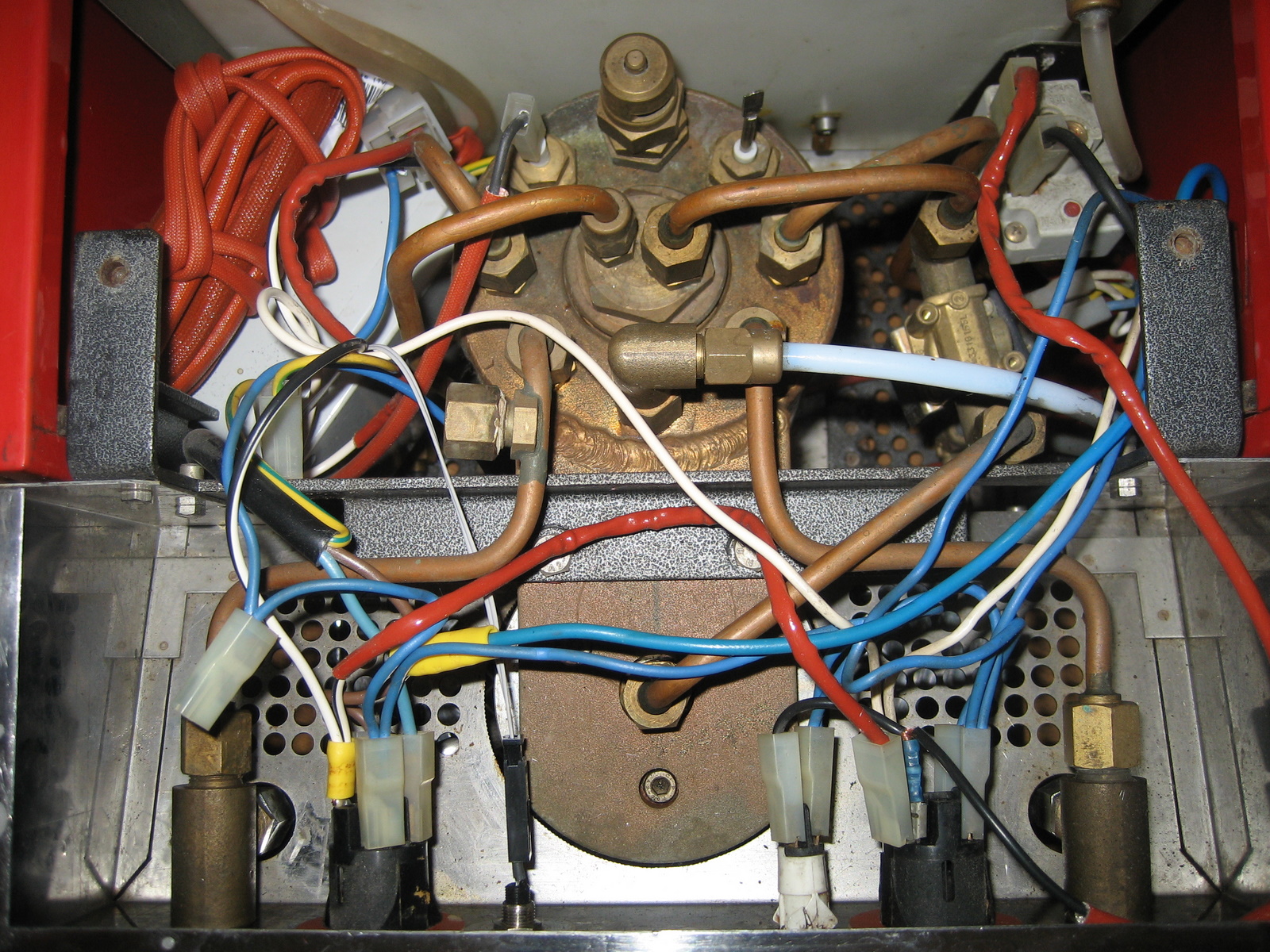
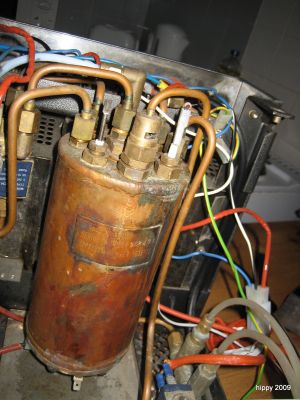

Also, the water tank has two hoses leading back into it. What are these for? They seem to feed a sputtering of hot water back into the cold water tank.
and so the discussion *cough* raged..
Thread on TooMuchCoffee regarding the leaking Bezzera BZ-99.
In the meantime, I’ve managed to do my usual trick and, thanks to Suzanne & Phil from (Bullet Coffee) who found it and showed me, I’ve upgraded to a Rancilio S26, which I should be picking up this Saturday from Leicester with help from Harvey.
A far bigger machine (4L boiler vs. 1.5L) this will be fed directly from the water mains rather than tank filled. Big Daddy Wayne will most likely be taking the Bezzera off me once I sort out its leak, replace the tired hoses and patch the drip tray hole.
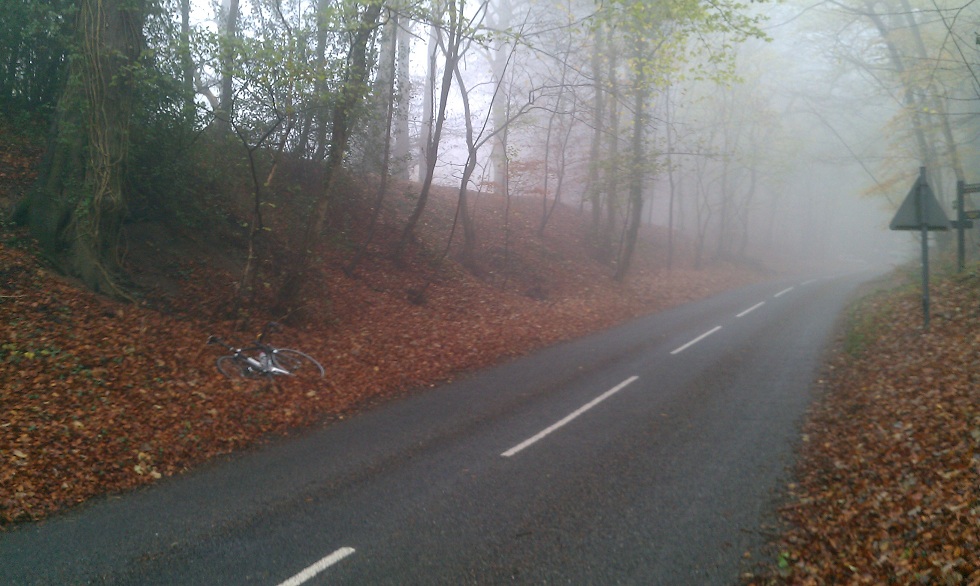
I was going to ride with the Willesden CC clubrun today but left a bit late so headed to the last place I rode in the Chilterns – Longdown Hill, where I defended my club hill climb trophy a few weeks ago. On the way out I spotted McCarthy and shortly after Willesden’s own Mike the Bike, both heading into town.
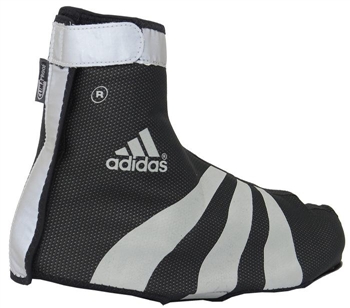
Today I finally unwrapped the overshoes I’d bought during last year’s very cold winter. It was the first time I’ve ever used full overshoes, normally preferring toe-warmers. I have to say, I really like these Adidas Climaproof booties. I didn’t really think about them for the ride and didn’t notice my feet getting particularly cold or anything. So job well done. Of course, now it’ll be another one of those things where I go “why the hell didn’t you try these things sooner?!” Stubborn idiot, I am.
I’m having some sick ideas at the moment about attempting to break the club’s 24hr TT time trial record. It currently stands at 459.07 miles (19.13mph) or 738.80 kilometres (30.78kph) and was set by Simon Doughty in 1995. Meurig James broke all the other club records last year, including 272.367mi for the 12hr, 3:45.18 for 100 miles, a 51 minute 25mi and a 19 minute 10mi! I’m not sure if he didn’t attempt the 24hr or didn’t break it.
There’s usually only a single 24hr TT in a year so you only get one chance. In 2011 there’s going to be two, the usual Mersey Roads 24 (Rapha inc. video) in Cheshire and a southern one, the Sussex 24hr.
So, I was doing some testing to see roughly what power output I’d need for 32kph and was finding it to be quite high. I’m hoping that was just because I’m running a huge anti-p_nct_re Schwalbe 25 on the rear and I’ve not adjusted my PT from 700×23. As it stands, holding 260W for 24 hours is not going to happen. No way.
I lost interest in that, cycled out the A413 and through Great Missenden then up and down Longdown Hill, then over to Whiteleaf. I picked the wrong turn so missed the intro but there was a through road so I could join the climb again. It looked completely different to how I remember. Lots of red from fallen leaves and quite foggy.
Then a quick little drop to an unfamiliar crossroads, a phone/GPS consultation and I was on my way back through Gt. Miss. and back towards London. Of course, I’d taken off my mudguard so it was now raining.
Just east of Uxbridge there was a guy I’ve seen before, Tim, who asked if I had a pump. He had a slow leak. Unsurprisingly he was using the devil spawn tyres produced by Continental (boo hiss). I ended up escorting him the 15k back to Pitshanger Lane (hinting he should pay the Bike Whisperer a visit), stopping every couple of kay to reinflate his tyre. It was a pain but I should earn some serious karma points right?
Bit of a cold, soggy ending but a good ride with some new (to me) product testing done, some new terrain explored and some miles in the legs, which was the main aim after all.
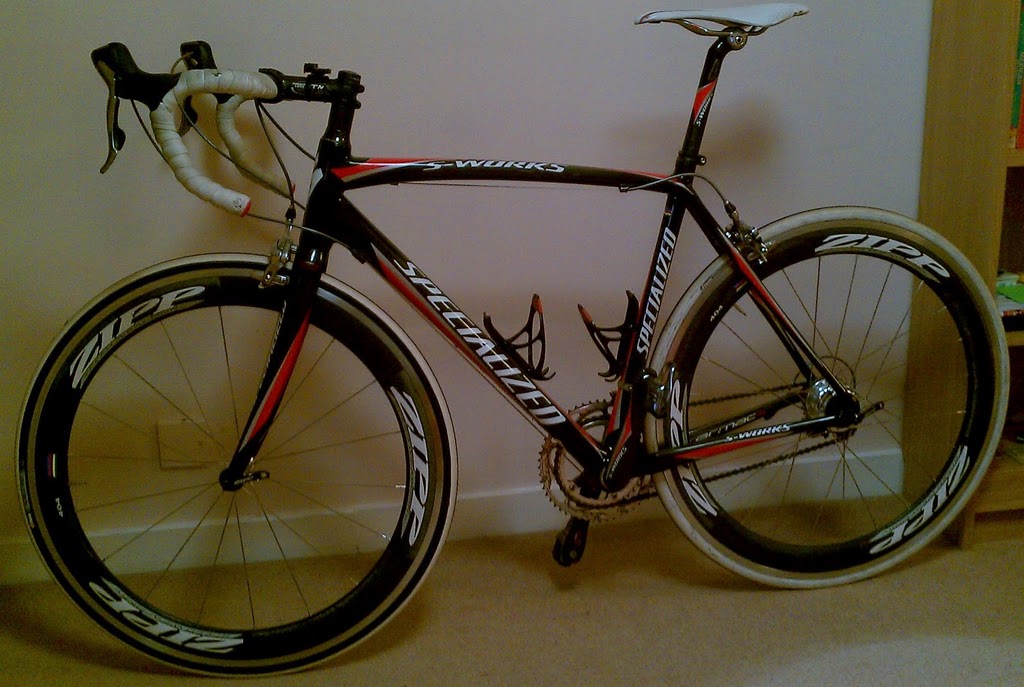
Another wired Powertap died on the Kinesis and Gizmond listed these on lfgss.com so I hatched a plan. Zipp 404s with wireless Powertap go on the good bike and the wireless Powertap with Open Pros can be moved to the Kinesis. The wired Powertap can then be shipped to Paligap for conversion to wireless and then I’ll think of something to do with that wheelset. The sad part about this upgrade is the S-Works probably won’t be ridden for 6 months whilst I wait for England’s crappy winter ‘seasons’ to vanish.

lcef.wordpress.com – Massive fund-raising shout-outs and thanks
It was a pleasure helping Dazzler and the LCEF (well, except for that 2 minutes of hill climbing!). Keep up the great work guys. Please help our injured couriers – donate to the LCEF.
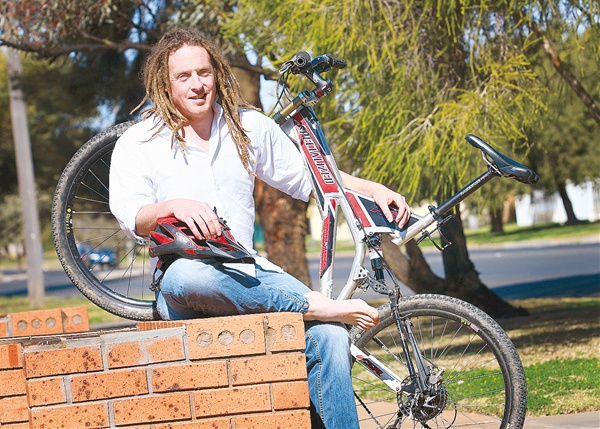
ANTHONY Connell is a mountaineer on a push bike. He thrives on the challenges of solo 24-hour mountain bike endurance racing -Â the extreme sport of riding a mountain bike for 24-hours non stop around a set course over rocky and hilly terrain.
He loves bikes and has grown up with them since getting his first bike when he was just a little tacker.
Today, at 31, after exploring many different types of riding -Â BMX, road racing, downhill mountain bike racing -Â he’s facing his biggest mental and physical test.
Solo 24-hour mountain bike enduro racing is the ultimate for off-road cycling enthusiasts.
It’s a long way from where Anthony started when he got his first, real bike.
He remembers his father walking across Fifteenth Street from Target wheeling a shiny metallic blue bike with gold brake levers in the early 1980s.
“We lived across the road from Target back then and when I looked through the front window and saw dad with the BMX -I knew as a five-year-old I was stepping up to the same bikes as the big boys – it was very exciting,” he said.
Fast forward 26 years and Anthony has qualified for the 24-hour Solo World championships to be staged at Mt Stromlo, outside Canberra, next month.
More than 400 mountain bike riders competed, including about 200 from Australia, with the remainder coming from the United States, Great Britain, Europe, Asia and South America.
To qualify, Anthony raced in his third solo 24-hour enduro in Adelaide in May this year and finished without incident, riding consistently over the 24-hour endurance ride.
Unfortunately, injuries sustained during the 24-hour enduro in Adelaide have put a question mark on his plans to compete in this world class event.
“The 24-hour enduro is a time-based race where riders complete as many laps of the set course over the 24-hour period -Â most laps wins.
“The courses are set in well established mountain biking areas - in Adelaide it was staged in the Mt Crawford forest in the Adelaide Hills.
“It was very hilly, but less rocky than the Mt Stromlo trails in Canberra where the world championships will be held.
“The Mt Crawford forest course held up really well, which was lucky for me, considering my suspension forks blew a seal and locked up solid in the first lap.
“My wrists took a fair pounding for the duration of the race.
“If it had happened in the rockier, drier and post-bushfired forest in Canberra, my wrists wouldn’t have lasted the distance.
“Riding bikes for me is all about personal inquiry -Â it’s not so much the competition, it’s the intense focus and freedom it creates.
“As a kid, I had heaps of energy like most kids do -Â riding bikes let me blow off a heap of steam and gave me independence to go round to friends’ places or hang out in the bush with mates without having to get a lift from the parents.
“Bikes have always meant freedom,”he said.
But that freedom comes at a price and almost cost Anthony his life.
“My downhill mountain bike riding came to an abrupt end after three years of competing and riding in the Dandenongs and Wodonga while living in those areas.
“I lost my focus in a practice run for the National Downhill Mountain Bike Championships, crashed off a seven foot drop, landed on my head and was fully paralysed when I came to.
“I was winched into a chopper, falling in and out of consciousness on my way to hospital.
“I remember one nurse very gravely suggesting I should make what could be my last call.
“I walked out of hospital that evening with just one bruise and a massive headache, but it took me a couple of weeks to regain my short-term memory and a couple of months longer to be back to -normal’.
“The real end of my downhill racing was when I returned to Mildura to live and work and found it very difficult to find a decent hill,” he joked.
“I heard about the Coomealla-Mildura Mountainless Bike Club and joined up to get involved in the mountain biking community.
“For three years I’ve been an active member of the club in both racing and helping organise club events.
“A few months before a 24-hour race I do heaps of kilometres on my road bike exploring the area and closer to the event, I’m on the mountain bike doing intense training and sharpening my handling skills.
“The Adelaide 24-hour enduro in May took a fair toll on my body, the wrists didn’t recover as well as the rest of my body and while having rehabilitation on them it revealed an underlying neck problem.
“I’m only just getting on top of it now -Â you hurt so much during and after a 24-hour race even when you’re super fit, so it’s really a lot to commit to one knowing your body’s not in peak condition.”
Away from the sport he loves, Anthony relaxes by … going for a ride.
“I’m really keen to get on my new mountain bike and explore further afield -Â it’s not all about racing,” he said.
“I just love getting out on my bike in the bush getting some exercise and seeing things -Â if there’s a sign to read or a view to be had, I’ll stop and take it in,” the bike riding enthusiast said.
“It was very hilly, but less rocky than the Mt Stromlo trails in Canberra where the world championships will be held.
“The Mt Crawford forest course held up really well, which was lucky for me, considering my suspension forks blew a seal and locked up solid in the first lap.
“My wrists took a fair pounding for the duration of the race.
“If it had happened in the rockier, drier and post-bushfired forest in Canberra, my wrists wouldn’t have lasted the distance.
“Riding bikes for me is all about personal inquiry -Â it’s not so much the competition, it’s the intense focus and freedom it creates.
“As a kid, I had heaps of energy like most kids do -Â riding bikes let me blow off a heap of steam and gave me independence to go round to friends’ places or hang out in the bush with mates without having to get a lift from the parents.
“Bikes have always meant freedom,” he said.
But that freedom comes at a price and almost cost Anthony his life.
“My downhill mountain bike riding came to an abrupt end after three years of competing and riding in the Dandenongs and Wodonga while living in those areas.
“I lost my focus in a practice run for the National Downhill Mountain Bike Championships, crashed off a seven foot drop, landed on my head and was fully paralysed when I came to.
“I was winched into a chopper, falling in and out of consciousness on my way to hospital.
“I remember one nurse very gravely suggesting I should make what could be my last call.
“I walked out of hospital that evening with just one bruise and a massive headache, but it took me a couple of weeks to regain my short-term memory and a couple of months longer to be back to -normal’.
“The real end of my downhill racing was when I returned to Mildura to live and work and found it very difficult to find a decent hill,” he joked.
“I heard about the Coomealla-Mildura Mountainless Bike Club and joined up to get involved in the mountain biking community.
“For three years I’ve been an active member of the club in both racing and helping organise club events.
“A few months before a 24-hour race I do heaps of kilometres on my road bike exploring the area and closer to the event, I’m on the mountain bike doing intense training and sharpening my handling skills.
“The Adelaide 24-hour enduro in May took a fair toll on my body, the wrists didn’t recover as well as the rest of my body and while having rehabilitation on them it revealed an underlying neck problem.
“I’m only just getting on top of it now -Â you hurt so much during and after a 24-hour race even when you’re super fit, so it’s really a lot to commit to one knowing your body’s not in peak condition.”
Away from the sport he loves, Anthony relaxes by … going for a ride.
“I’m really keen to get on my new mountain bike and explore further afield -Â it’s not all about racing” he said.
“I just love getting out on my bike in the bush getting some exercise and seeing things -Â if there’s a sign to read or a view to be had, I’ll stop and take it in,” the bike riding enthusiast said.
This story appeared in Saturday’s Sunraysia Daily 18-9-2010.
www.sunraysiadaily.com.au – The ride of his life